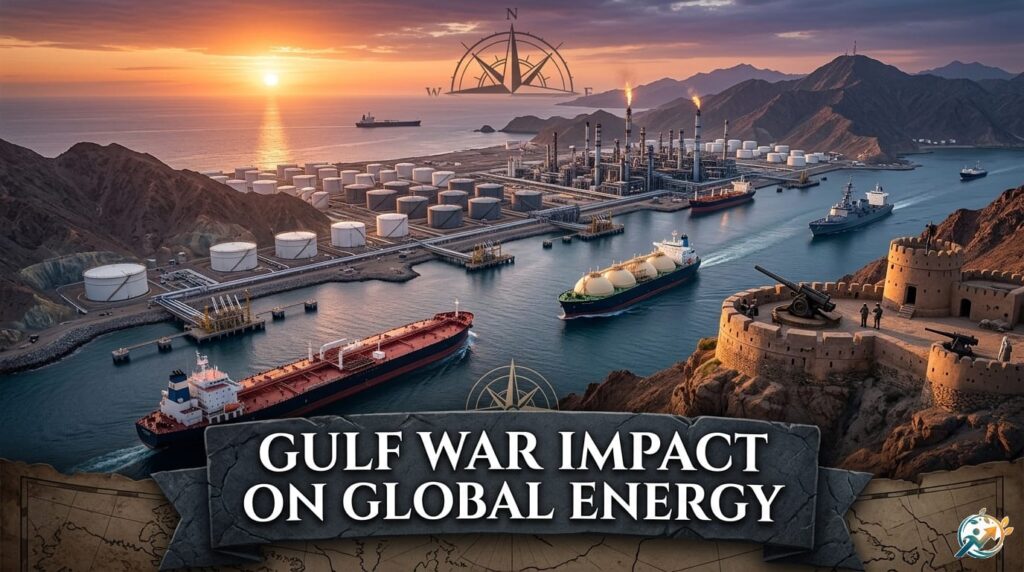

The modern global economy relies heavily on stability within the Middle East. Consequently, any escalation in regional conflicts sends shockwaves through international markets. Specifically, the Gulf War impact on global energy remains a critical focal point for economists and policymakers worldwide. As geopolitical tensions rise, the stability of vital maritime corridors becomes increasingly fragile. Therefore, understanding the strategic depth of this region is essential for predicting global market shifts.
Historically, the Arabian Gulf has served as the primary heartbeat of international oil supplies. Whenever a conflict erupts, immediate panic grips the financial sectors. For this reason, even minor disruptions can lead to massive spikes in crude prices. However, the true danger lies not just in psychological panic, but in physical supply limitations. Because many nations depend entirely on Middle Eastern exports, any prolonged blockade could trigger a deep worldwide recession.
The Strategic Vulnerability of Global Supply Chains
In addition to direct oil production, the physical transport routes are incredibly vulnerable to warfare. For example, the Strait of Hormuz represents the most vital choke point in the entire energy architecture. Millions of barrels of oil pass through this narrow waterway every single day. Therefore, any military threat to this passage instantly disrupts global distribution networks. As a result, shipping companies face skyrocketing operational difficulties during times of crisis.
Furthermore, maritime security directly influences international trade logistics. When a war occurs, insurance companies immediately raise their premiums for vessels operating in the Gulf. This means that shipping costs increase dramatically, which forces corporations to recalculate their budgets. Ultimately, these added expenses are passed down directly to the everyday consumer. Consequently, a localized conflict quickly transforms into an inflationary pressure felt across the globe.
To mitigate these extreme risks, many shipping firms opt to divert their fleets entirely. Instead of navigating through volatile zones, they choose longer, alternative routes around Africa. Although this choice provides safety, it introduces massive logistical delays. Specifically, a standard journey can take up to two additional weeks to complete. Consequently, global supply chains suffer from severe container shortages and delayed deliveries worldwide.
Gulf War Impact on Global Energy Security and Reserves
Beyond the immediate transport issues, long-term energy security becomes a paramount concern for major industrial powers. For instance, countries like the United States, China, and various European nations rely heavily on a steady flow of hydrocarbons. When regional instability threatens this flow, governments are forced to tap into their Strategic Petroleum Reserves (SPR). While this measure offers short-term relief, it cannot serve as a permanent solution to an extended geopolitical crisis.
Moreover, prolonged military engagement disrupts the underlying infrastructure necessary for oil extraction. Bombing campaigns, cyberattacks, and sabotage can severely damage pipelines, refineries, and offshore platforms. Repairing this sophisticated equipment requires substantial time, specialized engineering, and immense financial investment. Thus, even after a conflict concludes, the energy supply remains artificially constrained for months or even years. This structural damage guarantees that prices stay elevated for an extended period.
Simultaneously, international investors become highly hesitant to fund new energy projects within volatile regions. Because capital requires stability to generate returns, money shifts toward safer environments. This flight of capital slows down the technological advancement and expansion of local oil fields. In the long run, this lack of investment reduces the total spare capacity of the global energy market. Therefore, the system becomes even more fragile when future shocks inevitably occur.
Market Volatility and the Financial Shockwaves
As a direct consequence of supply anxieties, global financial markets experience unprecedented volatility. Commodity traders react instantly to breaking news, driving oil futures to historic highs. This sudden surge in energy costs acts as an immediate tax on global manufacturing. For example, industries that rely heavily on petrochemicals experience an instant compression of their profit margins. Consequently, stock markets worldwide frequently experience sharp downturns during major Gulf crises.
In addition, central banks face an incredibly difficult policy dilemma during these geopolitical emergencies. On one hand, rising energy prices drive up headline inflation rapidly. On the other hand, the economic uncertainty threatens to slow down overall GDP growth. Therefore, monetary policymakers must balance the need to raise interest rates with the risk of triggering a severe economic slowdown. This delicate balancing act complicates economic recovery efforts significantly across multiple continents.
Furthermore, developing nations bear the heaviest burden during these energy shocks. Unlike wealthier economies, many emerging markets lack the financial reserves to subsidize expensive fuel imports. Consequently, they suffer from acute currency depreciation and balance-of-payments crises. This economic distress often sparks localized social unrest, creating a secondary wave of geopolitical instability. Thus, the Gulf war impact on global energy ripples outward, transforming economic numbers into real-world human crises.
The Accelerating Shift Toward Energy Diversification
In response to these recurring vulnerabilities, the global community is actively seeking ways to reduce its dependence on volatile energy corridors. Many nations are aggressively accelerating their transition toward renewable energy sources. For example, solar, wind, and nuclear power are increasingly viewed as essential components of national security. By producing energy domestically, countries can effectively insulate themselves from Middle Eastern geopolitical shocks. Consequently, long-term conflict in the Gulf ultimately weakens the global market share of fossil fuels.
Additionally, regional powers within the Gulf are fully aware of these changing dynamics. As a result, nations like Saudi Arabia and the United Arab Emirates are investing heavily in economic diversification. Through strategic initiatives, they are rapidly building advanced technology sectors, global tourism hubs, and renewable energy infrastructure. This forward-thinking approach aims to secure their financial future even if global oil demand declines permanently. Therefore, the threat of conflict serves as a powerful catalyst for internal economic transformation.
In conclusion, the Gulf war impact on global energy extends far beyond simple fluctuations in oil prices. It fundamentally alters international trade routes, reshapes global financial policies, and accelerates the transition toward green technology. While the immediate effects bring inflation and logistical chaos, the long-term outcomes force the world to innovate. Ultimately, the stability of global energy markets will depend on how effectively nations can balance immediate geopolitical realities with long-term strategic independence.
Detailed Analysis of Historical Energy Disruptions
To fully grasp the magnitude of these dynamics, we must examine historical precedents. For decades, major conflicts in the Middle East have served as direct indicators of global economic health. Whenever energy infrastructure is compromised, the macroeconomic indicators of major trading nations shift dramatically. For instance, during previous instances of regional warfare, global industrial output fell significantly within quarters of the initial outbreak. This historical pattern underscores the absolute necessity of maintaining open, peaceful trade lanes.
Furthermore, the modern interconnected nature of global markets amplifies these historic vulnerabilities. In the past, a supply shock might take weeks to register across various sectors. Today, computer-driven algorithmic trading ensures that a single drone attack or political statement alters prices within milliseconds. This hyper-reactivity means that businesses must operate with unprecedented agility. To survive, modern corporations maintain complex hedging strategies in the futures markets, which adds another layer of cost to the global supply chain.
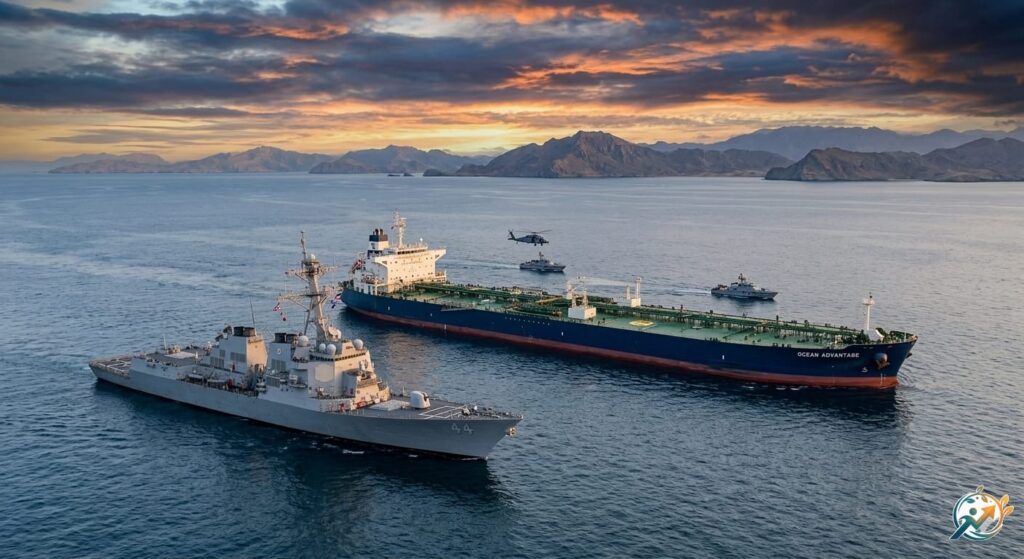
Finally, the diplomatic efforts to secure these vital regions require constant multinational cooperation. Because no single country can guarantee the total safety of global maritime trade, international coalitions are frequently formed. These naval task forces patrol the waters constantly to deter asymmetrical threats and state-sponsored aggression. However, maintaining such a massive military presence is financially exhausting and politically sensitive. Therefore, diplomatic dialogue remains the most sustainable mechanism to ensure that the global energy infrastructure does not dismantle the fragile structure of international commerce.