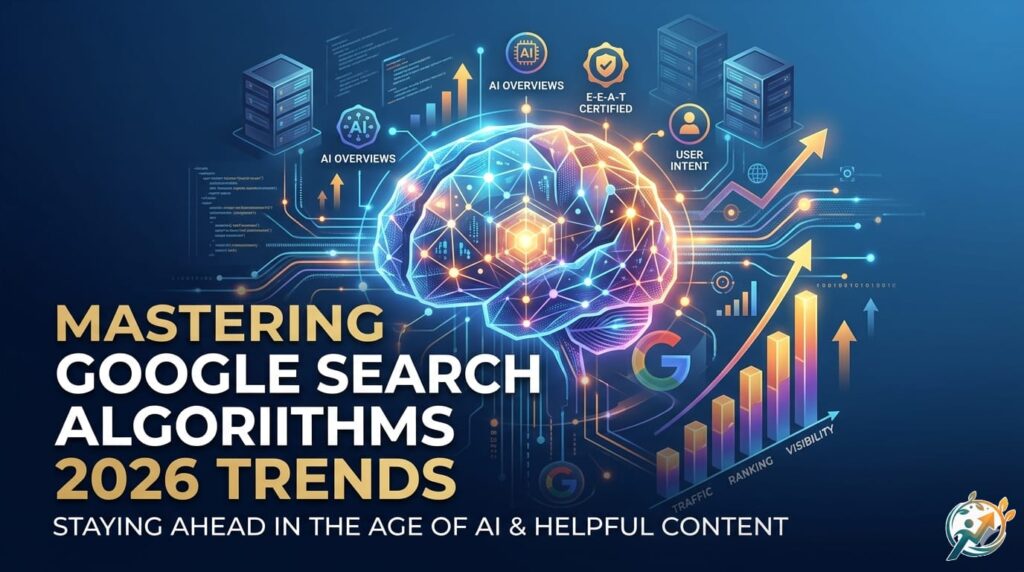

The digital landscape is shifting beneath our feet as we navigate the complexities of Google Search Algorithms 2026. For website owners, developers, and SEO specialists, staying ahead is no longer about matching keywords; it is about understanding the symbiotic relationship between artificial intelligence and human intent. As Google continues to refine its ranking systems, the emphasis has moved toward “Generative Engine Optimization” (GEO) and the rigorous enforcement of content quality standards.
The Evolution of Google Search Algorithms 2026
To understand where we are going, we must look at how far we have come. The Google Search Algorithms 2026 updates represent the most significant leap since the introduction of BERT. Today, the core ranking systems are powered by advanced neural networks that do not just read text—they interpret the context, the reliability of the source, and the specific “Helpfulness” of the information provided.
The primary goal of these updates is to eliminate “SEO-first” content—articles written solely to rank rather than to inform. Google’s recent core updates have integrated the Helpful Content System directly into the heart of its ranking engine. This means that if a site carries a significant amount of unhelpful, automated, or thin content, the entire domain’s visibility may suffer, regardless of how well an individual post is optimized.
Why Quality Matters in Google Search Algorithms 2026
One of the cornerstones of the Google Search Algorithms 2026 is the E-E-A-T framework: Experience, Expertise, Authoritativeness, and Trustworthiness. In 2026, “Experience” has become the most critical factor. Google now prioritizes content that demonstrates first-hand knowledge. Whether it is a technical guide on WordPress or a review of a software success story, the algorithm looks for unique insights that a generative AI cannot simulate without human input.
Trust is the central pillar. For sites in the YMYL (Your Money, Your Life) category, the scrutiny is even higher. Google’s systems are now capable of cross-referencing author credentials across the web. If you are writing about technical web management or financial transactions, ensuring that your “About Us” and “Author Bio” pages are transparent and verified is essential for maintaining rank in this new era.
Navigating Technical SEO for Google Search Algorithms 2026

Beyond content, the technical infrastructure of your website plays a pivotal role. The Google Search Algorithms 2026 have heightened the importance of “Interaction to Next Paint” (INP), which replaced First Input Delay as a core web vital. Sites that load quickly but feel “sluggish” during user interaction are being penalized.
For those using platforms like WordPress with Hostinger or similar providers, optimization is key. This includes:
- Server-Side Rendering: Improving how fast the server delivers the initial HTML.
- Clean Code: Minimizing unnecessary CSS and JavaScript from plugins.
- Mobile-First Indexing: Ensuring the mobile version of the site is not just responsive, but functionally superior.
The Impact of AI Overviews on Search Intent
A major shift in 2026 is the dominance of AI Overviews (formerly SGE). When users search for a query, Google often provides a synthesized answer at the top of the page. This has led to a “zero-click” phenomenon where users get their answers without visiting a website.
To thrive, creators must adapt by targeting “long-tail” queries and providing depth that an AI summary lacks. While an AI can give a 50-word summary, it cannot provide a 1000-word deep dive with personal case studies and expert analysis. This is where your long-form content strategy becomes a competitive advantage.
Strategies for Long-Form Content Success
Writing 1000+ words is not about fluff; it is about comprehensive coverage. To rank well in 2026, your content should:
Visual Hierarchy: Use bullet points and bold text to make the article “scannable” for both users and crawlers.
Metric Recommendation for 2026
Content Length 1,000 – 1,500 words for competitive topics
Primary Keyword Use in the first 100 words and H1
User Retention Aim for a low bounce rate via internal linking
Readability Grade 8-9 level for maximum accessibility Future-Proofing Your Digital Presence As we look toward the latter half of the year, the integration of multi-modal search—where users search using images, video, and voice simultaneously—will continue to grow. Optimizing your images with descriptive Alt-text and ensuring your video content is indexed will be just as important as the written word.
Furthermore, the “social signal” factor is gaining weight. Google is increasingly looking at how often a brand or a specific article is mentioned in community discussions and social media. This “off-page SEO” builds the authority that the 2026 algorithms crave. It is about building a community around your content, ensuring that your site is viewed as a destination rather than just a search result.
Conclusion: Adapting to the New Reality In conclusion, the Google Search Algorithms 2026 are designed to reward honesty, depth, and technical excellence. By focusing on high-quality, long-form articles that meet the “all green” SEO metrics, you are not just chasing an algorithm; you are building a sustainable digital asset.
The secret to success in this environment is a blend of technical precision and creative storytelling. Whether you are documenting the rise of tech giants or providing a guide for web development, your voice is your most valuable asset. Stay consistent, monitor your analytics, and always prioritize the user experience. The algorithms will change, but the demand for great content is eternal.